Energy
Asset, production and sustainability analytics for oil, gas, utilities and renewables.
What Energy teams are working on
Energy runs on two estates that were never designed to meet: the operational one on the plant, the grid and the field, and the enterprise one in finance, maintenance and planning. Most questions worth asking need both: why output dropped, which asset fails next, what a contract commits you to.
The blueprints here bridge them. Meter and sensor data onto Azure and Fabric, digital twins for wind and solar fleets, predictive maintenance on rotating equipment, production optimization from SCADA and reservoir models, ESG and HSE reporting, and offline-first apps for crews with no signal.
Can OT and IT data sit in one governed platform?
Which asset is about to fail, and what is the evidence?
Can crews capture work with no connectivity and sync later?
Where do the emissions figures in the annual report come from?
Where Energy work concentrates
Across the 18 solution blueprints on this page.
What this sector leans on more than the rest of the catalogue does.
Blueprints ready to adapt
The practices behind this work
What the Energy solutions on this page are built with.
Guides from our Data & AI practice
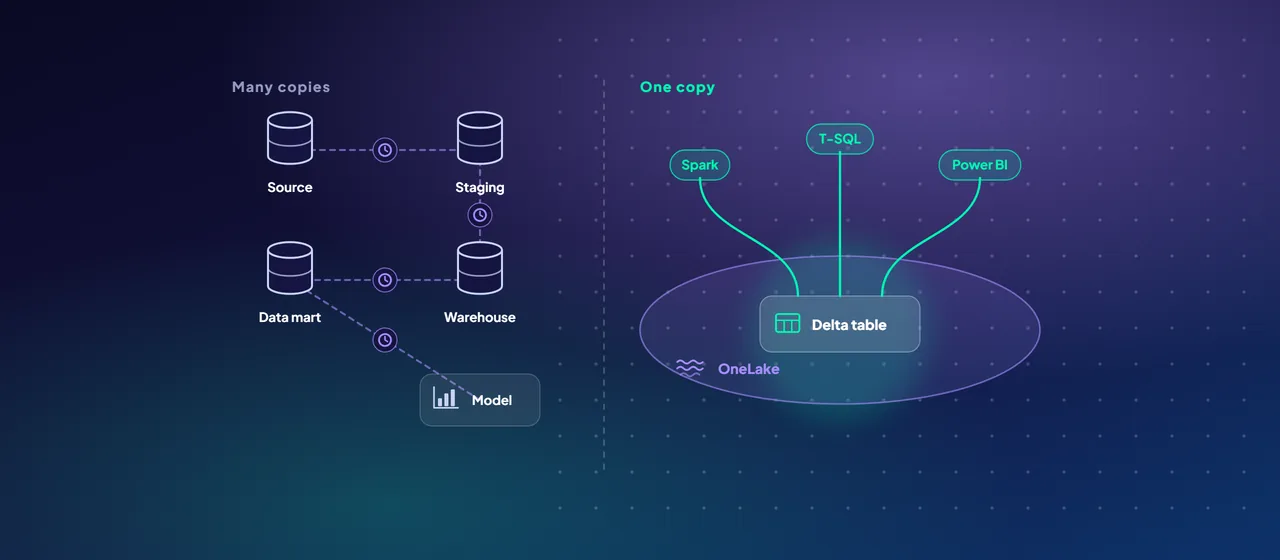
Microsoft Fabric vs the traditional data warehouse: what actually changes
How Microsoft Fabric's architecture differs from a classic data warehouse, from one copy in OneLake and shortcuts to Direct Lake and capacity, and what stays the same.
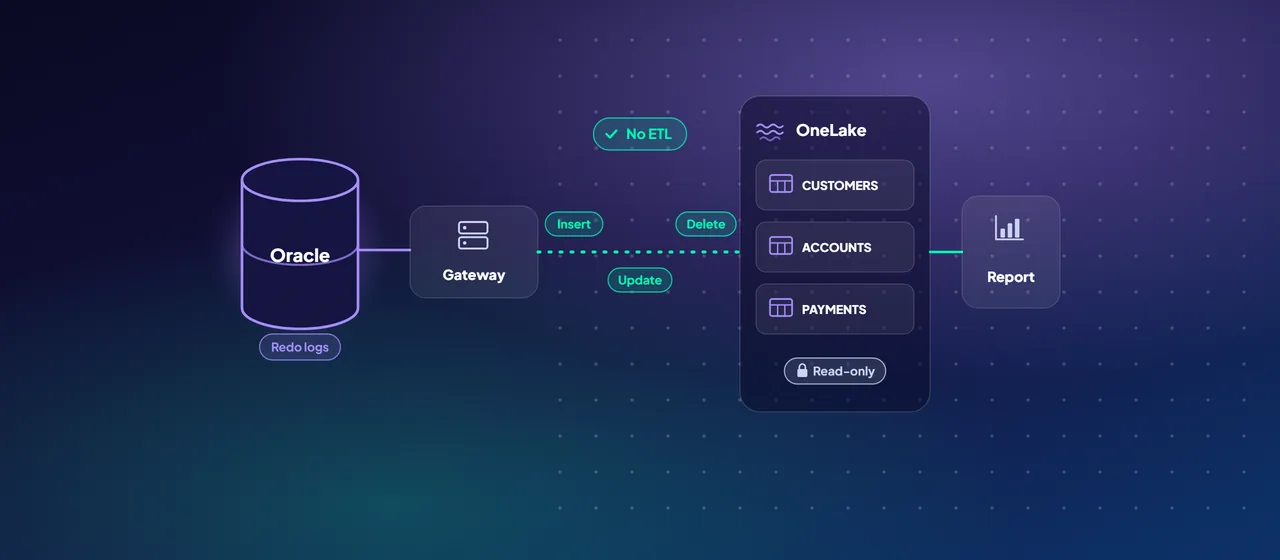
Mirroring Oracle into Microsoft Fabric without building ETL
How Microsoft Fabric mirrors Oracle databases using LogMiner and the on-premises data gateway, what lands in OneLake, what it costs, and where GoldenGate still fits.
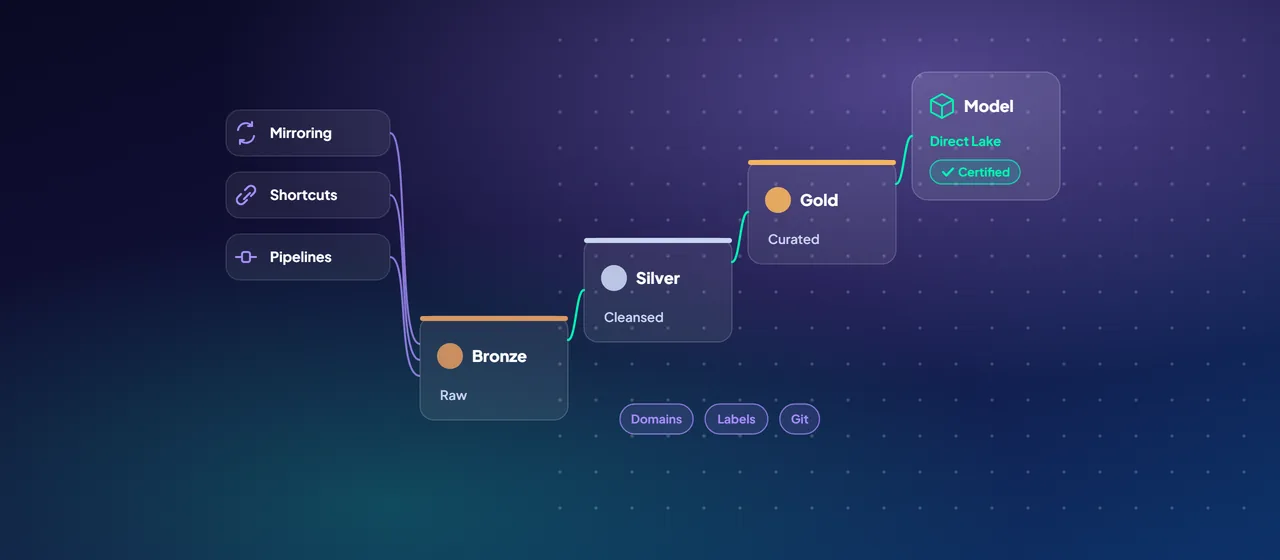
Building a Fabric data landing zone: medallion, governance and Direct Lake
A practical blueprint for a Microsoft Fabric data landing zone, covering workspaces, bronze, silver and gold layers, mirroring, Purview, Direct Lake and Git-based CI/CD.
Working in Energy?
Talk to an architect who has delivered in your sector.