Sales reports one revenue figure on Monday morning. Finance reports another. Operations is working from last week's extract, and marketing has a dashboard with its own definition of a customer. Everyone has data. Nobody has the same answer.
The cause is rarely a lack of tools. It is the opposite: a CRM, an ERP, a data warehouse, a few data marts, a reporting tool, and a layer of spreadsheets holding it all together. Each hop copies the data, and each copy drifts. Microsoft Fabric is Microsoft's answer to that sprawl, and it is worth understanding what it changes before deciding whether it belongs in next quarter's plan.
What Microsoft Fabric is
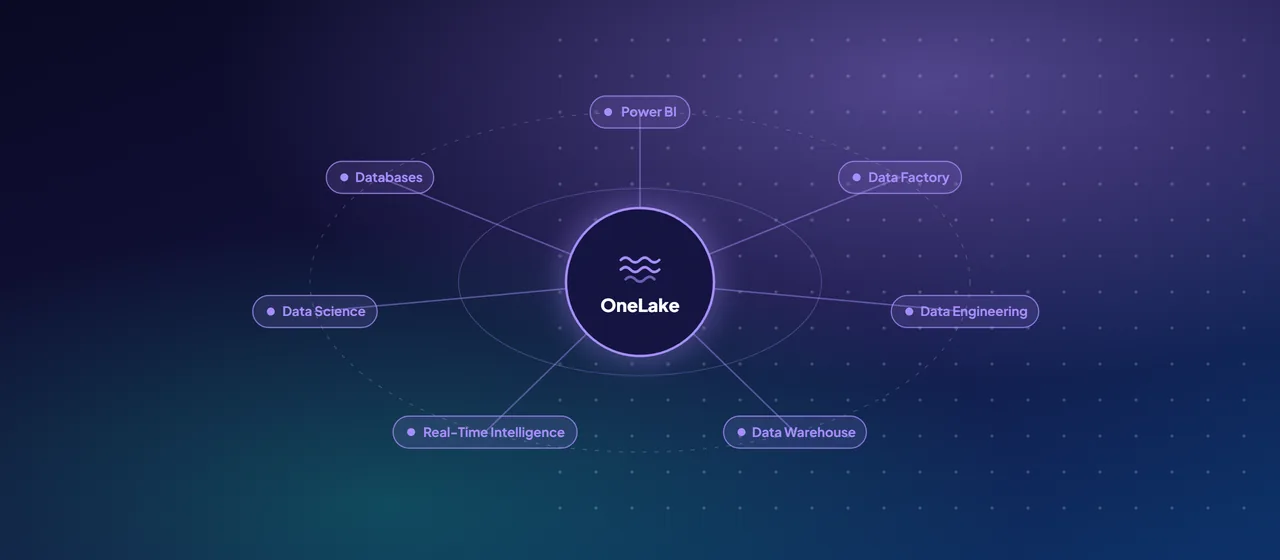
Microsoft Fabric is a software-as-a-service (SaaS) analytics platform. It brings data integration (Data Factory), data engineering with Apache Spark, Fabric Data Warehouse, Real-Time Intelligence, Fabric Data Science, databases and Power BI into one service that runs on shared compute and shared storage.
The shared storage is OneLake, a single logical data lake for the whole organization, built on Azure Data Lake Storage Gen2. Every Fabric workload reads and writes the same OneLake data, in the open Delta Lake table format, so a table built by a data engineer is the same table an analyst queries and a Power BI report reads. There is no separate copy for each tool.
Because it is SaaS, there are no clusters or servers to size and patch. You buy capacity, create workspaces, and start building.
What changes for the business
The technology matters less than what it allows people to stop doing. In practice, the changes show up in five areas.
One set of numbers
When finance, sales and operations report from the same governed tables and the same semantic model (the layer that defines measures like "revenue" and "active customer"), the Monday meeting stops being a debate about whose spreadsheet is right. Fabric does not fix inconsistent definitions by itself. It removes the technical excuse for having more than one.
Less time moving data
Much of a data team's week goes into pipelines that copy data from one place to another. Fabric reduces that work in two ways:
- Mirroring continuously replicates operational databases, including Azure SQL Database, SQL Server, Oracle, Snowflake and Azure Cosmos DB, into OneLake in near real time, without building extract, transform and load (ETL) pipelines.
- Shortcuts let OneLake point at data where it already lives, in Azure Data Lake Storage, Amazon S3, Google Cloud Storage or other Fabric items, without copying it.
Less copying means fewer pipelines to maintain and fewer places for numbers to diverge.
Faster reports on large data
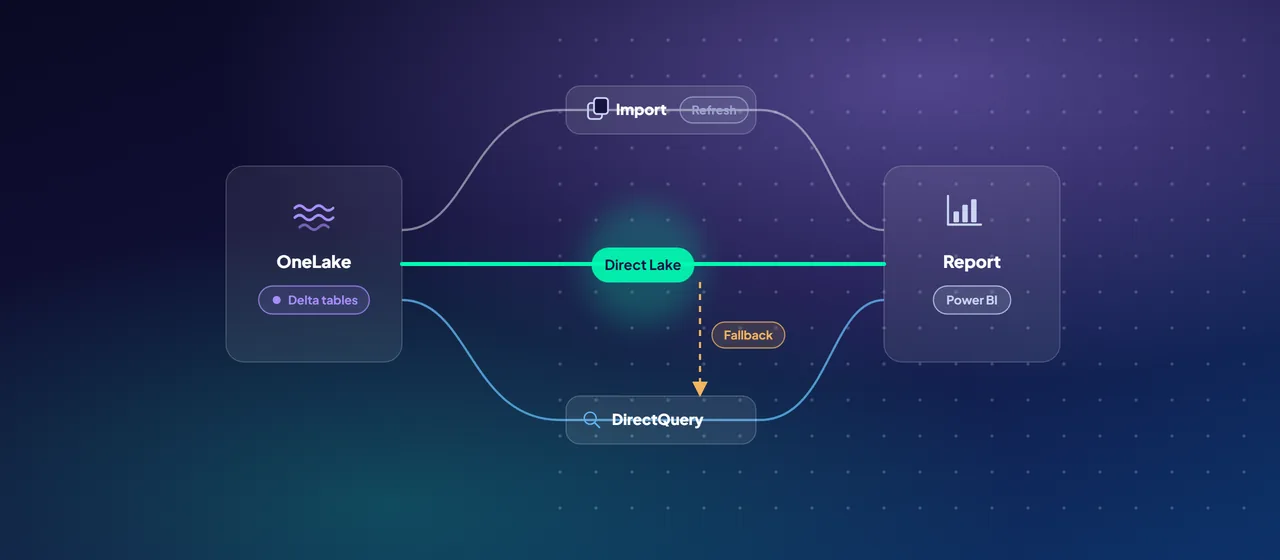
Power BI in Fabric can use Direct Lake mode, which reads Delta tables in OneLake directly into memory instead of importing a full copy of the data on a refresh schedule. Reports can reflect new data without waiting for an overnight refresh, and data volumes can exceed what fits in a traditional import model.
Governance built in, not bolted on
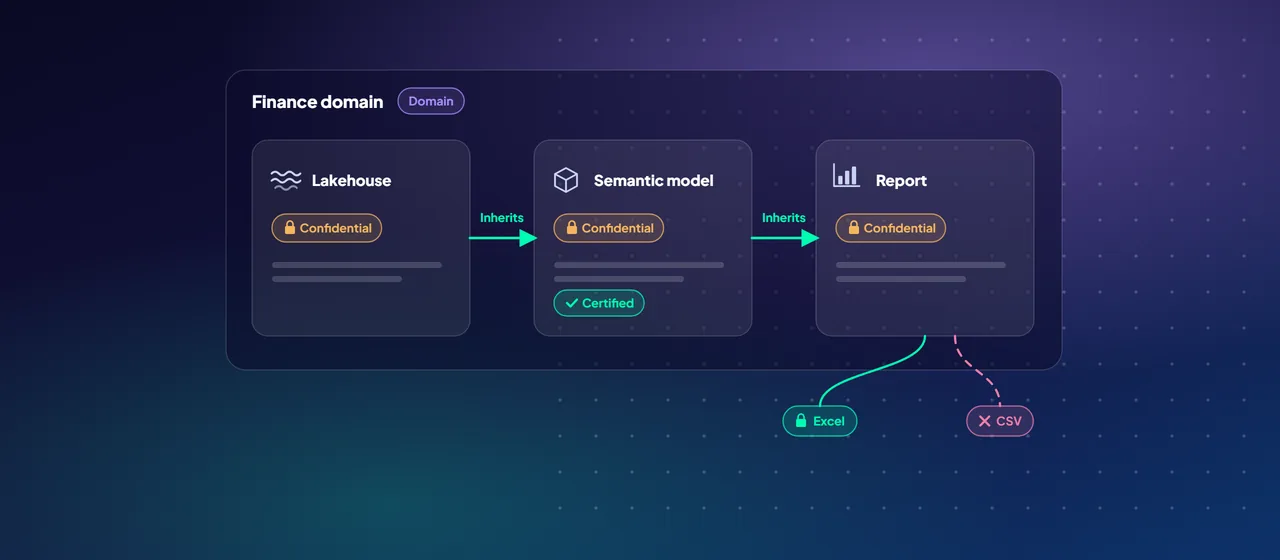
Fabric works with Microsoft Purview. Sensitivity labels from Microsoft Purview Information Protection can be applied to Fabric items, data loss prevention (DLP) policies can detect sensitive data in lakehouses, warehouses and semantic models, and all Fabric user activity is recorded in the Microsoft Purview audit log. For banks, government entities and energy companies, this matters as much as performance: regulators ask who saw what data, and the answer should not depend on stitching logs from six products together.
A foundation for AI
AI is only as useful as the data behind it. Fabric includes Copilot features that help write queries, pipelines and code, and it gives AI projects a single, governed place to find clean data. The hard part of most AI initiatives is not the model. It is getting trustworthy, well-described data to it, which is exactly the problem Fabric addresses.
How Fabric is licensed
Fabric uses a capacity model rather than per-product licensing:
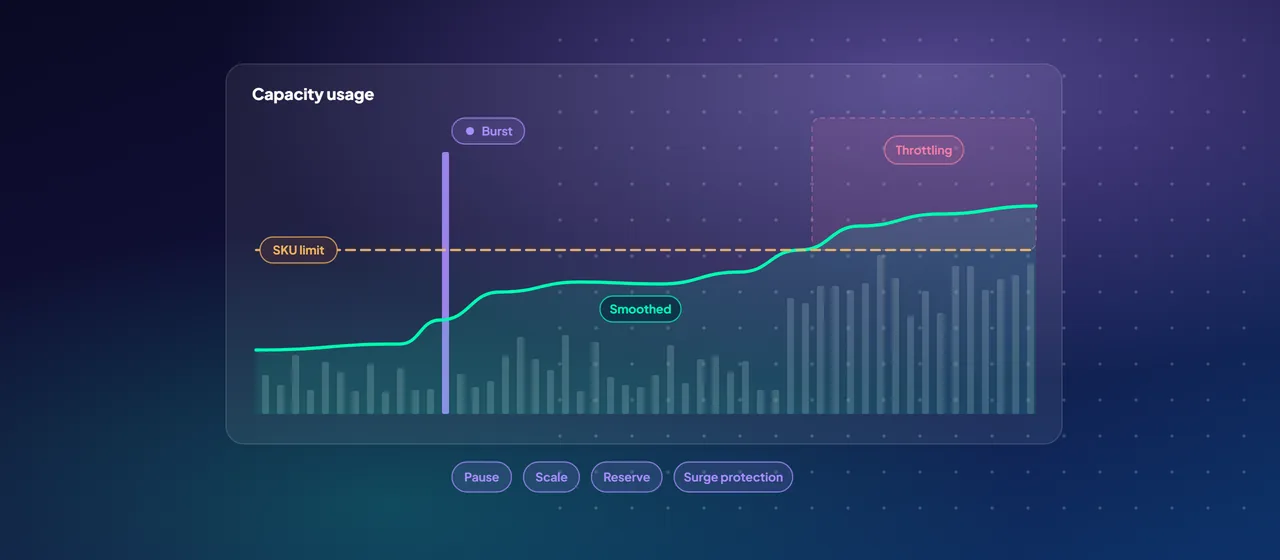
- You buy an F SKU capacity in Azure, sized in capacity units (CUs), from F2 up to F8192. All workloads share that capacity.
- Azure bills F capacities per second with no commitment, and you can reserve capacity for a year to reduce cost.
- On F64 or larger, users with a free Fabric license and a viewer role can view Power BI content. Below F64, each viewer needs a Power BI Pro or Premium Per User license.
- Anyone creating and sharing Power BI content still needs a Pro or Premium Per User license.
- A 60-day trial capacity lets you test Fabric features before buying.
Microsoft is retiring Power BI Premium per-capacity (P) SKUs and recommends F SKUs for new purchases. If you already run Power BI Premium, your Fabric decision and your Power BI renewal are now the same conversation.
Every user who views Power BI content needs a Power BI Pro or Premium Per User license.
Users with a free Fabric license and a viewer role can view Power BI content.
Is Fabric right for your organization?
Not always. Fabric tends to deliver the most value when several of these are true:
- Your data lives in several systems, and reports disagree because each one is fed by a different copy.
- You already use Power BI and Microsoft 365, so the reporting and identity layers are in place.
- Your data team spends more time maintaining pipelines than answering business questions.
- You run more than one analytics product (a warehouse, a Spark platform, a reporting tool) and pay separately for each.
- You have AI plans that are stalled on data quality or access.
- You need consistent governance and auditing across analytics for regulatory reasons.
It is a weaker fit if your analytics estate is small and stable, or if you have recently invested heavily in another platform and it is working. Fabric can also sit alongside other platforms, since mirroring and shortcuts can bring in data from Snowflake, Azure Databricks and cloud storage without a full migration.
Where to start
Start with one business question that currently produces conflicting answers, such as monthly revenue by region, and trace every system and copy it passes through. That exercise shows where Fabric would remove steps and where it would not.
From there, a short discovery workshop followed by a pilot on a trial capacity gives you real cost and performance data before you commit to a capacity size. CloudGate runs these workshops and pilots for organizations assessing Fabric.
Talk to an architect